
Rising electricity costs and increasing environmental concerns are driving homeowners and businesses toward smarter energy solutions. Among the most effective and sustainable options, solar power has gained significant attention for its ability to deliver clean, renewable electricity while reducing long-term utility expenses. At the heart of this technology are solar panels—innovative systems that convert sunlight into usable energy. With continuous advancements in solar technology, modern solar panels have become more efficient, durable, and accessible than ever before. From residential rooftops to large-scale commercial installations, solar energy is transforming the way electricity is generated and consumed. Understanding how solar panels work, their types, materials, and financial benefits is essential for anyone considering a shift toward renewable energy.
What is a solar panel, and how does it function?
A solar panel is a device that generates electricity from sunlight through the photovoltaic (PV) effect. It consists of several solar cells that capture sunlight and convert it into electrical energy.
Here’s how it works:
• Sunlight hits the solar cells
• Electrons inside the cells become energized
• This movement generates direct current (DC) electricity
• An inverter converts DC into alternating current (AC)
• AC electricity powers your home appliances
Solar panels are usually mounted on rooftops or in open areas to ensure they capture as much sunlight as possible.
History of Solar Panels: Who Invented Solar Technology?
The history of solar panels begins with a discovery made in 1839 by French scientist Alexandre-Edmond Becquerel, who found that light could generate electricity. But the first real solar cell was made in 1954 by a team at Bell Laboratories. Since then, solar technology has greatly improved, becoming more effective, cheaper, and easier to use. Now, solar panels are used worldwide in homes, businesses, and even in space.
Types of Solar Panels: Monocrystalline, Polycrystalline, and Thin-Film.
The market currently offers three primary types of solar panels.
- Monocrystalline Solar Panels
• Made from a single crystal structure
• High efficiency (15–22%)
• Longer lifespan
• Sleek black appearance
• More expensive - Polycrystalline Solar Panels
• Made from multiple silicon crystals
• Slightly lower efficiency (13–16%)
• More affordable
• Blue-colored panels - Thin-Film Solar Panels
• Lightweight and flexible
• Lower efficiency
• Used in large-scale or specialized applications
Which Solar Panel is Best for Home Use?
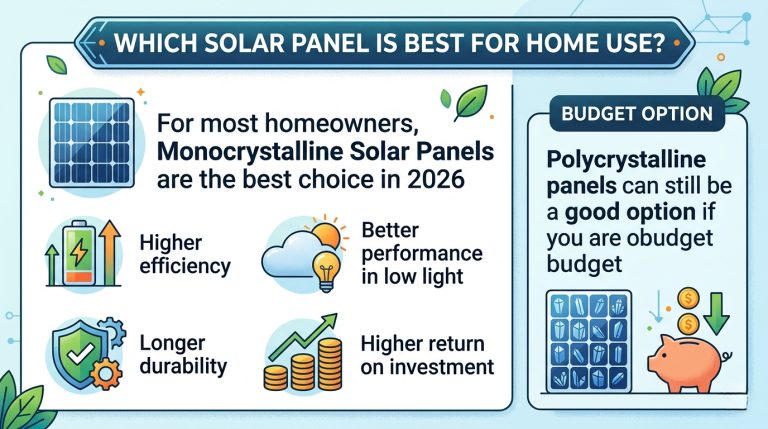
For most homeowners, monocrystalline solar panels are the best choice in 2026.
They provide:
- Higher efficiency
- Better performance in low light
- Longer durability
- Higher return on investment
However, if you are on a budget, polycrystalline panels can still be a good option.
What Are Solar Panels Made Of? (Materials Explained)
Solar panels are built using several key materials:
• Silicon is the primary material used in solar cells.
• Glass – protects the cells from the weather
• Aluminum frame – provides structure and durability
• EVA (Encapsulant) – protects cells from moisture
• Backsheet – adds insulation and safety
Silicon is the most critical component as it converts sunlight into electricity.
What Defines a Tier 1 Solar Panel and Why Is It Important?
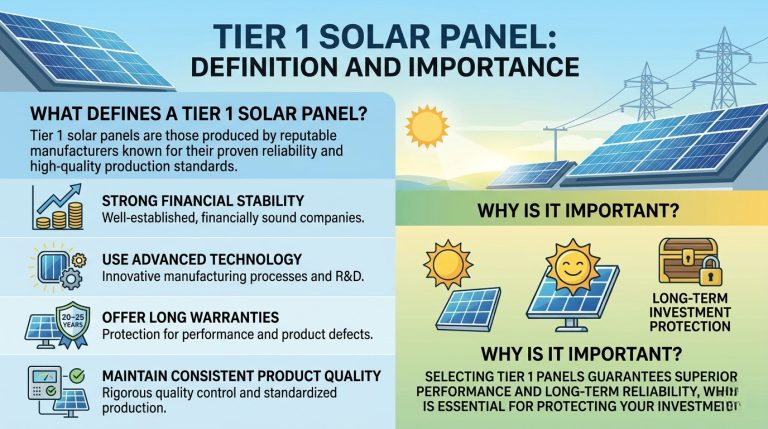
Tier 1 solar panels are those produced by reputable manufacturers known for their proven reliability and high-quality production standards.
Tier 1 manufacturers typically:
- Have strong financial stability
- Use advanced technology
- Offer long warranties (20–25 years)
- Maintain consistent product quality
Selecting Tier 1 panels guarantees superior performance and long-term reliability, which is essential for protecting your investment.
How to Select the Ideal Solar Panel for Your Home
Choosing the appropriate solar panel involves considering multiple factors.
Key Things to Consider:
• Efficiency – Higher efficiency means more power
• Cost – Balance between budget and quality
• Warranty – Look for at least 20–25 years
• Space available – Roof size matters
• Select panels that are best suited for your local climate conditions.
If your roof space is limited, choose high-efficiency panels. For larger areas, more cost-effective options may be more suitable.
How Much Money Can Solar Panels Save?
A primary benefit of solar panels is the significant cost savings they provide.
On average:
• You can reduce electricity bills by 50%–90%
• Monthly savings are determined by energy consumption and system size.
• Payback period: 4–7 years
• Lifespan: 25+ years
This means that once you have recouped your initial investment, you can enjoy nearly free electricity for years to come.
In nations where electricity prices are rising, solar panels can yield thousands of dollars in savings over time.
How to Clean and Maintain Solar Panels
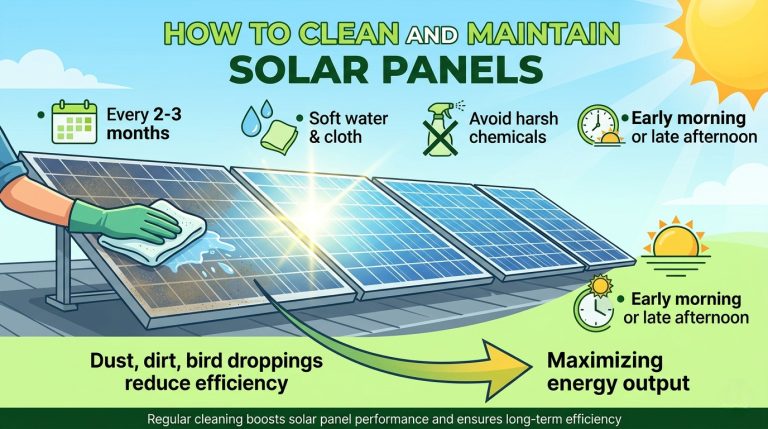
While solar panels need little upkeep, cleaning them regularly boosts their efficiency.
Cleaning Tips:
- Clean panels every 2–3 months
- Use soft water and a cloth or sponge
- Avoid harsh chemicals
- Clean early morning or late afternoon
To ensure maximum energy output, it is essential to keep panels clean, as dust, dirt, and bird droppings can reduce their efficiency.
How to Safely Test and Dispose of Solar Panels
How to Check a Solar Panel:
- Measure voltage using a multimeter
- Check inverter performance
- Monitor energy output regularly
Disposal of Solar Panels:
Solar panels should not be discarded as ordinary trash.
Proper disposal methods:
- Recycling through certified facilities
- Returning to manufacturers (if available)
- Using e-waste recycling centers
Recycling aids in reclaiming valuable resources such as silicon, glass, and aluminum, thereby lessening environmental harm.
Conclusion
Solar panels are a strong and forward-thinking way to lower energy costs and help protect the environment. Thanks to improvements in performance, durability, and cost, solar technology is now a smart choice for homes and businesses looking to be more self-reliant with their energy. By choosing the right type of solar panel, taking good care of it, and understanding its full value, people can get the most out of it in terms of performance and savings. As the need for clean energy grows around the world, solar panels are not just an option anymore—they are a wise, dependable, and necessary part of today’s energy choices.
FAQ's
Frequently Asked Questions

Modern solar panels usually achieve efficiency rates of 18% to 22%, while premium models can perform even better. Ongoing technological advances have greatly improved energy conversion efficiency, making solar panels more reliable and productive for both residential and commercial applications.
Solar panels can still produce electricity even on cloudy or rainy days, though efficiency may decrease. By harnessing sunlight instead of direct heat, they generate energy even in low-light conditions, guaranteeing consistent performance year-round.
Solar panel performance is influenced by various factors such as sunlight exposure, panel orientation, shading, temperature, and the overall quality of the system. Correct installation and consistent maintenance are essential for maximizing energy production and ensuring long-term efficiency.
Solar panels are considered a highly valuable long-term investment because they reduce electricity costs and boost property value. Offering a lifespan of more than 25 years with minimal upkeep, they deliver consistent financial and environmental benefits over time.
Related posts
 Solar Energy System
- April 8, 2026
- 12:07 pm
